
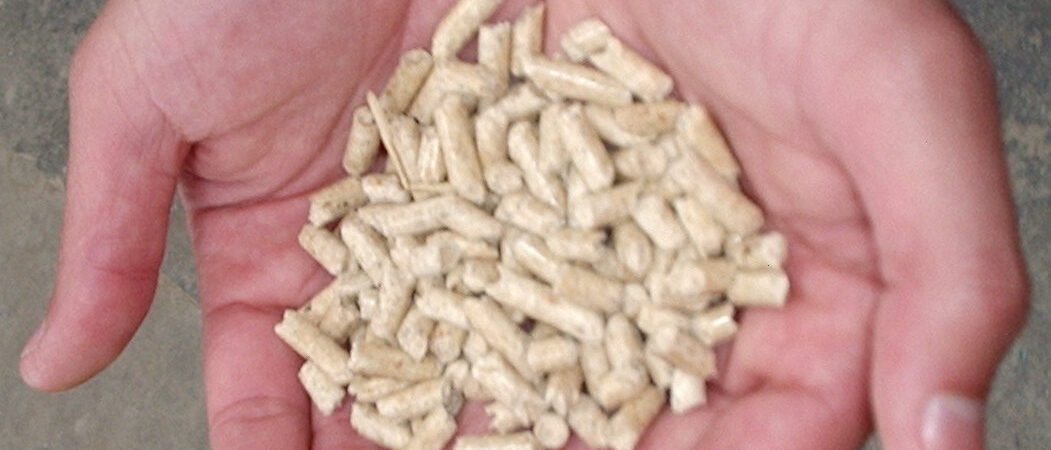
The wood pellets price per ton in autumn 2026 runs from roughly €170 to €230 a tonne when you buy a full truckload, through €320 to €420 for a single pallet of heating pellets, up to €440 to €610 for bagged pellets bought a few sacks at a time in shops across Europe. In North America a ton of bagged heating pellets usually lands between $200 and $400. Where you sit in that range comes down to five things: bags or bulk, how much you order, the grade, the season and the cost of getting the fuel to your door.
That’s the quick answer. The rest of this guide is for anyone about to spend real money on a winter’s heat. It explains what pushes the wood pellets price per ton up or down, what other buyers are paying right now in different countries, how to turn a price per ton into a price per kilowatt-hour so you can compare it with oil or gas, and how to spot a price that’s too good to be true. We sell heating pellets by the pallet and by the truckload, so you’ll also see our own prices laid out per tonne, with links straight to each product.
On this page
Wood pellets price per ton at a glance
Pellet prices aren’t set by one global exchange the way crude oil is. Most fuel is sold on contracts or through regional dealers, so a tonne can cost very different amounts depending on who’s buying and where. Here’s the broad picture for 2026, from the cheapest way to buy pellets to the dearest.
| How the pellets are bought | Typical price per tonne (2026) | Who buys this way |
|---|---|---|
| Industrial pellets by the shipload, delivered to northwest Europe | about $205 to $236 | Power stations and large utilities |
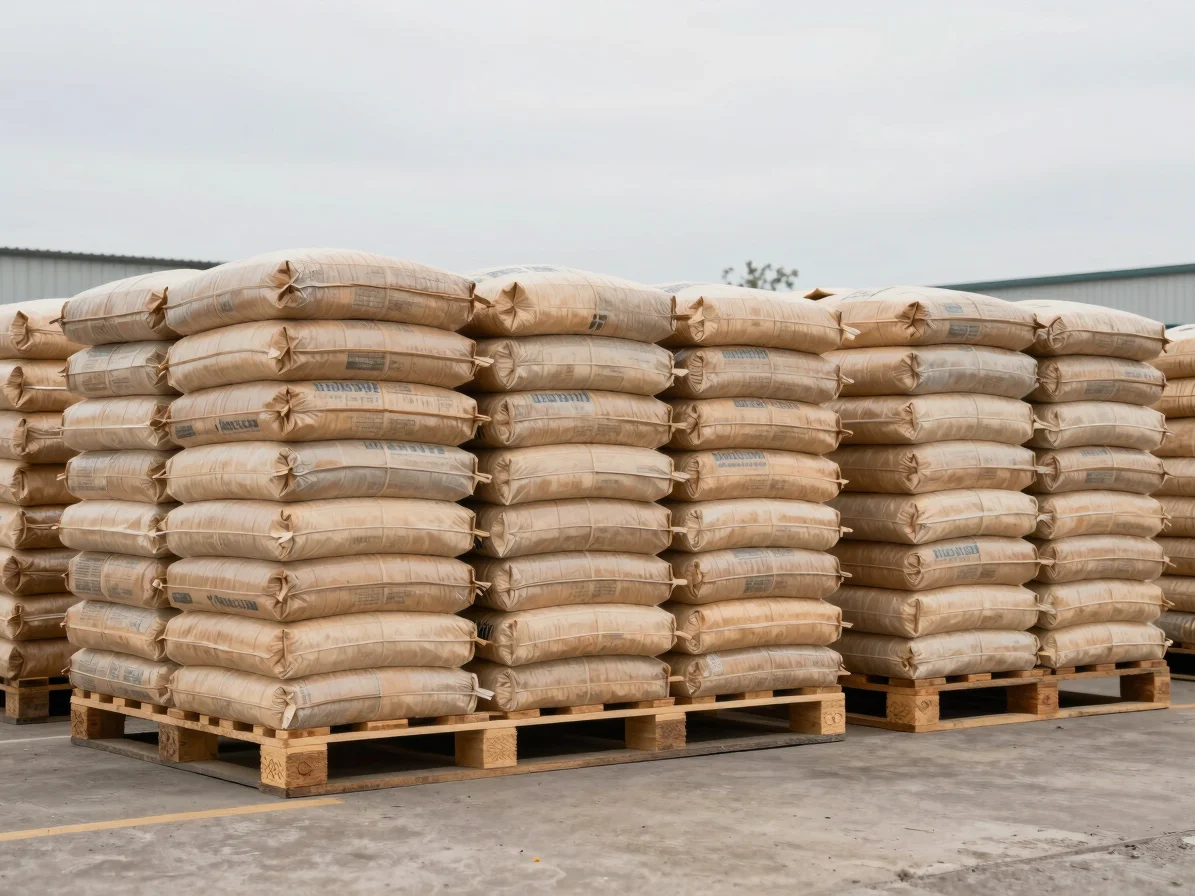
| Full truckload of bagged heating pellets (24 tonnes) | about €170 to €230 from us, before delivery | Resellers, farms, hotels, communal boilers |
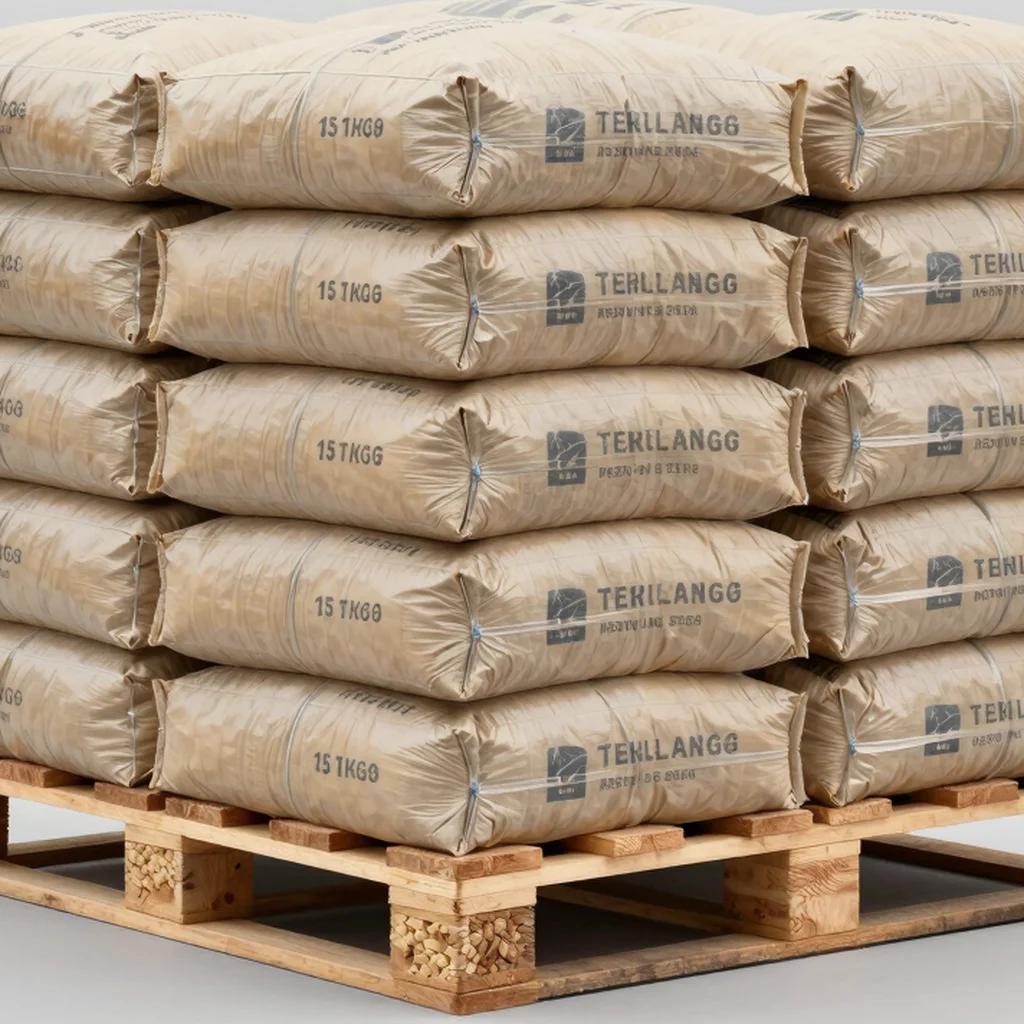
| Single pallet of heating pellets (about 1 tonne) | about €320 to €420 from us, before delivery | Households with a stove or boiler |
| Bulk pellets blown into a home store (Germany, France) | about €430 to €475 delivered | Homes with a pellet boiler and silo |
| Bagged pellets bought by the sack in shops (Italy) | about €400 to €610 | Occasional users with small stoves |
The gap between the top and bottom rows is huge, and most of it isn’t the wood. It’s packing, handling, storage, transport and the retailer’s margin. The pellets themselves are very similar from row to row, yet the wood pellets price per ton more than doubles from the first row to the last. That’s the single most useful thing to understand about the wood pellets price per ton: the more of the supply chain you skip by buying bigger, the less each tonne costs you.
Our wood pellets price per ton, product by product
We’d rather show you our numbers than make you hunt for them. Below is what each of our heating and cooking pellet products works out to per tonne at today’s listed prices. Delivery isn’t included because it depends on your address; we confirm it in writing before anything leaves the yard. Think of this table as our wood pellets price per ton before freight.
| Product | What you get | Listed price | Price per tonne |
|---|---|---|---|
| Hardwood Heating Pellets, Truckload | 24 t of oak and beech pellets, bagged on pallets | €4,100 | about €171 |
| Softwood Heating Pellets, Truckload | 24 t of pine and spruce pellets, bagged on pallets | €5,500 | about €229 |
| Softwood Heating Pellets, 1 Ton Pallet | About 1 t in 15 kg bags | €320 | about €320 |
| Mixed Pellet Pallet | 975 kg: 33 bags softwood, 32 bags hardwood | €330 | about €338 |
| Oak Blend Pellets, 1 Ton Pallet | About 1 t of oak-based hardwood pellets | €335 | about €335 |
| Hardwood Heating Pellets, 1 Ton Pallet | About 1 t of oak and beech pellets | €420 | about €420 |
| Softwood BBQ Pellets, 1 Ton Pallet | About 1 t of grill pellets | €340 | about €340 |
| Hardwood BBQ Pellets, 1 Ton Pallet | About 1 t of cooking pellets for smokers | €790 | about €790 |
Prices on the site are the ones that count, and they can change with the market, so check the product page before you budget. If you’re comparing us with a local dealer, ask the dealer for their price per tonne and their delivery charge, then ask us for ours. Comparing like with like is the only fair way to do it, and it’s the only way to know whose wood pellets price per ton is really lower.
Not sure which fuel suits your appliance? Our guides to hardwood pellets and softwood pellets go through the differences in plain terms. You can also browse everything in one place in the shop.
Ton or tonne? Get the unit right before comparing
This catches people out all the time, especially when they’re comparing a wood pellets price per ton found online in different countries.
- A tonne (metric ton) is 1,000 kg, or about 2,205 lb. Europe, most of Asia, Africa and Latin America price pellets this way.
- A short ton is 2,000 lb, or about 907 kg. That’s the “ton” used in the United States, and a US pallet is usually fifty 40 lb bags.
So a US “ton” holds about 9% less fuel than a European tonne. If a North American seller quotes $300 a ton, that’s roughly $331 per tonne once you correct for weight. When you see a wood pellets price per ton quoted anywhere, check which ton it means before you do any sums. Our own prices are per metric tonne, and a full pallet from us is about 1,000 kg in 15 kg bags (the mixed pallet is 975 kg). Our earlier guide on what’s on a pallet of pellets goes into bag counts and pallet weights in more detail.
What moves the wood pellets price per ton
Six things decide most of the wood pellets price per ton you’re quoted. Knowing them helps you judge whether a quote is fair and when to buy.
1. Sawdust supply
Most heating pellets are pressed from sawmill leftovers: sawdust, shavings and offcuts. When sawmills cut less timber, there’s less raw material, and pellet prices rise. That’s exactly what happened in 2026. The German Pellet Institute linked this autumn’s rise to sawmills slowing down because demand for sawn timber is weak, which leaves less residue for pellet plants (top agrar, reporting DEPI figures for October 2026). In other words, a quiet building trade can push up the wood pellets price per ton you pay for heating fuel.
2. The season
Demand climbs when the weather turns, so autumn and winter prices sit higher than spring and summer ones. In France, the bulk price tracked by Selectra fell to €387 a tonne in late summer and was back at €426 by mid-September, the same level as in April (Selectra, October 2026). The swing isn’t always dramatic, but the wood pellets price per ton is usually kinder in the quiet months.
3. Bags versus bulk
Bagging costs money: the plastic, the bagging line, the pallet and the stretch wrap. Bulk pellets blown into a silo skip all that, but they need a proper store and a delivery truck with a blower. For a household, bagged pellets on a pallet are the simplest option and still cheap per tonne compared with buying single sacks. For a large boiler, bulk or a full truckload of pallets brings the wood pellets price per ton down further.
4. Order size
Every delivery has fixed costs: the truck, the driver, the paperwork, the time to load and unload. Spread those over 24 tonnes and they almost disappear per tonne. Spread them over one sack and they’re most of the price. That’s why order size moves the wood pellets price per ton more than almost anything else. German figures show the effect clearly: in October 2026 a 6-tonne order averaged €464.61 per tonne, while 26-tonne orders were traded at roughly €443 to €451 depending on region (Haustechnikdialog, citing DEPI).
5. Certification and grade
Certified pellets cost a little more to make, because the producer has to test regularly and keep the fuel within limits. In Europe the main scheme is ENplus. Its top class, A1, caps moisture at 10% and ash at 0.7%, and requires mechanical durability of at least 98% (ENplus handbook, quality requirements). In the US, the Pellet Fuels Institute’s Premium grade allows up to 1% ash and 8% moisture (Biodiesel Magazine, on the PFI grade standards). Paying a few euros more on the wood pellets price per ton for a reliable grade is usually money well spent, and we come back to why below.
6. Distance and delivery
Pellets are heavy and low in value per kilo, so transport takes a big bite out of the final price. A tonne travelling a few hundred kilometres by road costs far less to move than one crossing an ocean and then a country. That’s why the same fuel can be cheap near a pellet plant and expensive on an island or in a remote valley, and why the wood pellets price per ton you see online rarely includes the last leg to your door.
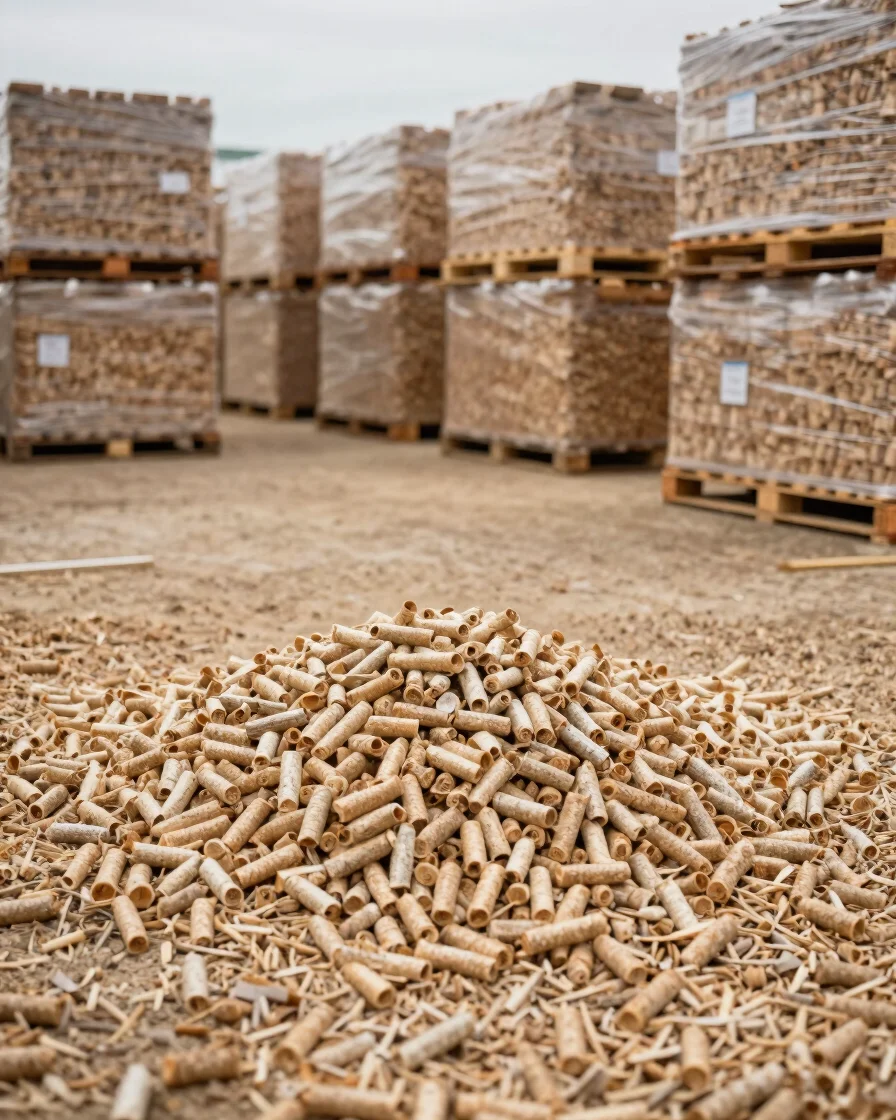
Wood pellets price per ton by country in 2026
These are published prices for autumn 2026 from national price trackers. They’re useful benchmarks, but remember that most of them include local delivery and tax, while a supplier’s listed price often doesn’t. Treat them as a guide to a normal wood pellets price per ton in each market, not a quote.
Germany
Germany publishes one of the most trusted monthly pellet indices. In October 2026, ENplus A1 pellets averaged €464.61 per tonne for a 6-tonne order, delivered within 50 km with all charges and VAT included, which works out to 9.29 cents per kilowatt-hour of heat (Haustechnikdialog, citing DEPI). Prices for 26-tonne orders were about 27% higher than a year before (top agrar). Even after that rise, the same source puts pellets at roughly 45% cheaper than heating oil per unit of heat.
France
French prices moved sharply this autumn. Bulk pellets went from €388 a tonne in late August to €466 in early October, while pellets in bags held at €433 a tonne over the same period (Bourse Inside, using Selectra data). A late-September survey of about 130 French towns found an average of €431 a tonne for bulk delivery, ranging from €406 to €475 (Selectra). That same report noted the official quarterly index sat at €388, which shows how much a spring average can lag what you’ll actually be quoted in October.
Italy
Italy is Europe’s biggest market for bagged pellets, and most Italians buy the standard 15 kg sack. In October 2026 a 15 kg bag typically costs €5.99 to €9.20, or roughly €400 to €613 per tonne (Idealista). The national survey by AIEL put certified ENplus A1 bags at an average of €7.14 in April 2026, up 30% on a year earlier, and bulk pellets delivered by tanker at €497 per tonne including VAT (QualEnergia, citing AIEL). Italy also imports most of what it burns, which is one reason its wood pellets price per ton sits near the top of Europe.
United Kingdom
In the UK, bulk pellets were selling for about £340 to £400 a tonne this autumn and bagged pellets for about £430 (Selectra UK). The same analysis estimates a tonne holds about 4,800 kWh of energy, putting bulk pellets close to mains gas per unit of energy and far below electricity.
United States and Canada
North American pellets are mostly sold in 40 lb bags, fifty to a ton. Typical prices run from about $200 to $400 per ton, with an average around $250, and bags cost $5 to $10 each (HomeAdvisor). Prices in the Northeast tend to sit at the top of that range in winter. Remember that these are short tons, so add about 10% to compare that wood pellets price per ton with a European tonne.
Industrial pellets shipped by sea
At the very bottom of the market sit industrial pellets, bought by power stations in shiploads of tens of thousands of tonnes. In January 2026 they were assessed at about $205 per tonne delivered to northwest Europe (Argus Biomass Markets, January 2026), rising to about $231 by April, when one 20,000-tonne cargo was discussed at $236 delivered to the UK (Argus Biomass Markets, April 2026). These aren’t the same product a homeowner buys. They’re shipped loose, aren’t bagged, and are usually a lower grade, so you can’t use them as a fair comparison for stove fuel.
Price per ton versus price per kWh: the number that actually matters
The wood pellets price per ton is a good starting point, but what you really pay for is heat. Two tonnes at the same price can give different amounts of warmth if one is wetter or burns less completely. So it’s worth converting the wood pellets price per ton into a cost per kilowatt-hour.
Certified A1 pellets must hold at least 4.6 kWh of energy per kilo, the same as 16.5 MJ/kg (ENplus). Good pellets often test closer to 4.8 to 5.0 kWh per kilo. Taking 4,800 kWh per tonne as a fair middle figure, here’s what our prices come to in fuel cost per kWh, before delivery and before your appliance’s efficiency:
| Product | Price per tonne | Fuel cost per kWh |
|---|---|---|
| Hardwood truckload | about €171 | about 3.6 cents |
| Softwood truckload | about €229 | about 4.8 cents |
| Softwood 1 ton pallet | €320 | about 6.7 cents |
| Oak blend 1 ton pallet | €335 | about 7.0 cents |
| Hardwood 1 ton pallet | €420 | about 8.8 cents |
To get the cost of the heat that actually reaches your rooms, divide by your appliance’s efficiency. A modern pellet boiler running at around 90% turns 6.7 cents of fuel into heat at roughly 7.4 cents per useful kWh. Compare that with your gas or oil bill per kWh and you’ve got a real answer to “are pellets cheaper for me?” rather than a guess.
One honest caveat: these are fuel-only figures. Your delivered price per tonne will be higher once transport to your address is added, so do the sum again with the delivery quote included before you decide.
Is a cheap wood pellets price per ton a bargain or a warning?
Sometimes a low wood pellets price per ton is a genuine bargain. Sometimes it’s a problem you’ll pay for all winter. A few checks help you tell whether a low wood pellets price per ton is real value.
Low-grade fuel costs more to burn. Uncertified pellets can be wetter, dustier and higher in ash. The US Environmental Protection Agency notes that lower-quality pellets may give less heat and create fine dust, while better pellets burn cleaner and leave less ash, and that many stove makers recommend using only pellets from qualified producers (EPA Burn Wise, pellet stoves). More ash means more cleaning, and more clinker in the burn pot can mean breakdowns.
“Premium” on a bag proves nothing on its own. The word isn’t protected. What counts is a certification mark you can check, such as ENplus or the PFI quality mark, and a supplier who’ll tell you the grade in writing.
Price that’s far below the local market deserves questions. If a tonne is offered for a fraction of what every national tracker shows, ask what grade it is, where it’s made, what the delivery costs and how payment works. A genuine seller will answer all of that without fuss. Be wary of anyone who only accepts payment methods you can’t reverse, or who won’t put the delivery cost in writing.
Fines eat your money. Dust at the bottom of the bag is fuel you’ve paid for that won’t feed properly. ENplus A1 limits fines in bagged pellets to 0.5% at the point of loading. Durable pellets that don’t crumble in transport are worth a slightly higher wood pellets price per ton.
Hardwood or softwood: does the wood pellets price per ton change?
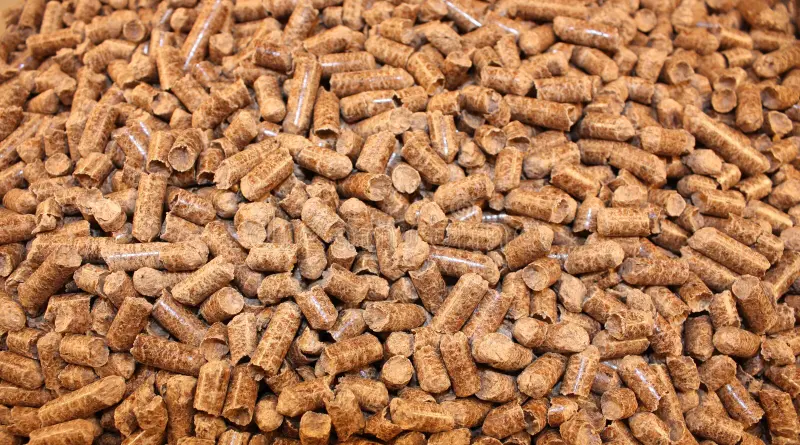
It can, though not always in the direction people expect. Softwood pellets, made from pine and spruce, contain natural resins and often test slightly higher in energy per kilo. Hardwood pellets, made from oak and beech, are dense and burn long and steady. In practice, the difference in heat per tonne between two good certified pellets of either type is small. What matters more than a small gap in the wood pellets price per ton is that your appliance runs well on the fuel you choose.
Prices depend on local supply. Where there’s lots of conifer forestry, softwood is cheaper. Where beech and oak sawmills dominate, hardwood can be the better buy. On our own list, the hardwood truckload is currently the lowest price per tonne we offer, while for single pallets the softwood pallet is the cheaper one.
If you can’t decide, the Mixed Pellet Pallet gives you 33 bags of softwood and 32 bags of hardwood, so you can try both in your own stove before committing to a full pallet or truckload of one type. Browse the hardwood pellets category or the softwood pellets category to see every option.
Pallet or truckload: how much you save
Order size is where buyers cut the wood pellets price per ton the most, and it’s simple arithmetic. Take softwood heating pellets from our range:
- One 1 ton pallet at €320 works out to €320 per tonne.
- A 24-tonne truckload at €5,500 works out to about €229 per tonne.
That’s roughly €91 less per tonne, or about €2,180 across 24 tonnes, before delivery. For hardwood the gap is wider: the 1 ton hardwood pallet is €420, while the hardwood truckload comes to about €171 a tonne.
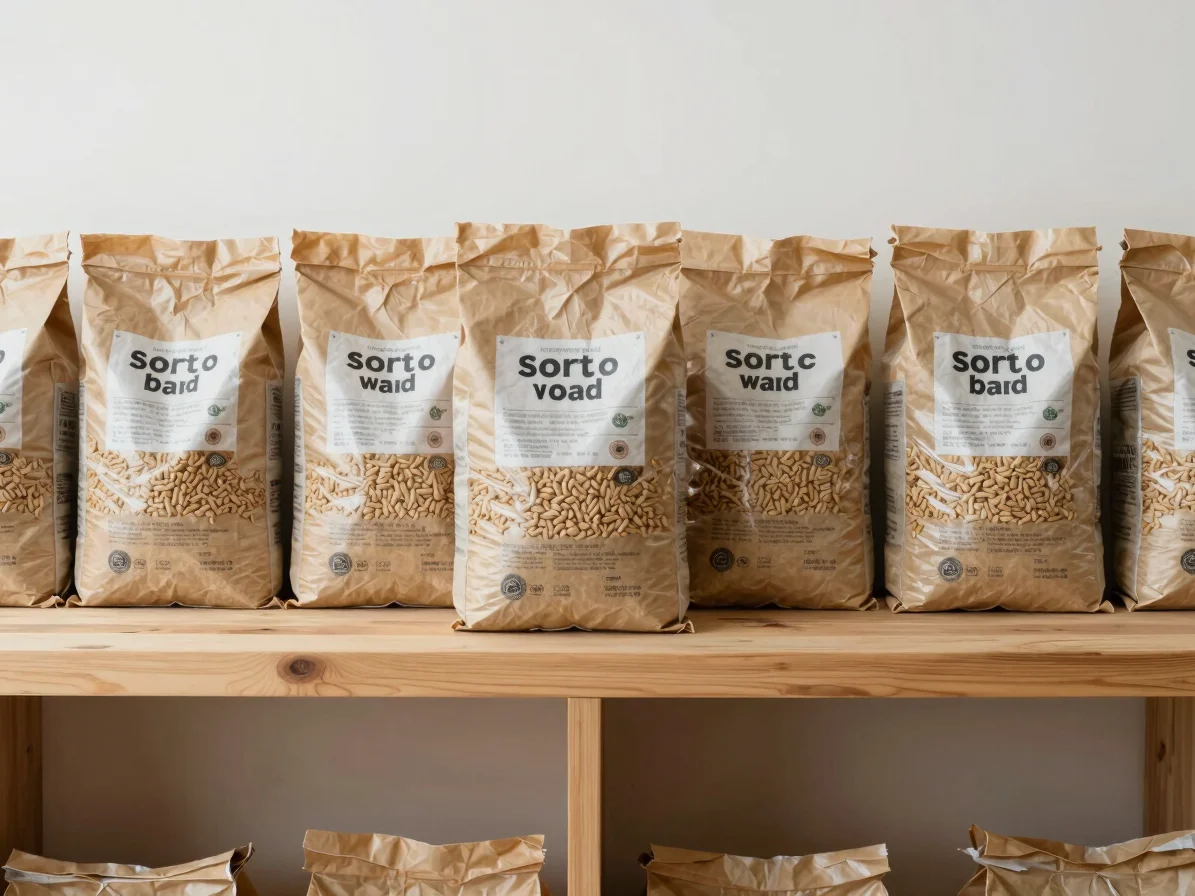
A truckload gives the lowest wood pellets price per ton, but it isn’t for everyone. You need room for about 24 pallets, a hard surface the truck can reach, and a way to unload. But plenty of buyers share one: a group of neighbours, a farm and its cottages, a small hotel, a school or a reseller stocking a shop. If that’s you, the wood pellet truckload page lists the options. If you’d like a mid-size order, such as five or ten pallets, contact us and we’ll quote it.
How many tonnes do you actually need?
Buying more than you’ll burn just ties up cash and storage space, however good the wood pellets price per ton looks. A rough way to estimate: if you know how many litres of heating oil you used to burn, divide by 500 to get tonnes of pellets, since a tonne of pellets holds roughly the energy of 500 litres of oil. A home that used 2,000 litres of oil a year will typically need around four tonnes of pellets. For a stove used only in the evenings, one or two pallets often covers a winter. Our pallet of pellets guide has more ways to work this out from your gas bill or the size of your appliance.
What a fair price per tonne should include
Before you compare two quotes for the wood pellets price per ton, check they cover the same things. A clear quote tells you:
- The product and grade, with the certification if it has one.
- The net weight, and whether that’s a tonne or a short ton.
- The packing: 15 kg bags, 40 lb bags, big bags or loose bulk.
- The pellet diameter, usually 6 mm for domestic appliances.
- Delivery to your address, including any tail-lift or unloading charge.
- Tax, and whether the price shown includes it.
- How long the price is held for.
Every product page on our site lists the specification in the short description, and we confirm the delivery cost for your address before dispatch, so you know the full figure before you pay.
Delivery: how it changes the real wood pellets price per ton
On a single pallet, delivery can add a good share of the fuel cost, especially over long distances or to places a standard truck can’t reach easily. On a full truckload, the same journey is shared across 24 tonnes, so delivery adds far less to the wood pellets price per ton.
A few things keep delivery cheaper:
- A hard, level drop point. Pallet trucks can’t roll on gravel or grass. If the driver can set the pallet down on concrete or tarmac, unloading is quick.
- Clear access. Low branches, narrow lanes and steep drives can mean a smaller vehicle or a second visit.
- Ordering together. Two or three pallets on one delivery cost less per tonne than three separate deliveries.
- Ordering early. Hauliers get busy once the cold arrives, and rush deliveries cost more.
Tell us your address and access when you order, and we’ll give you the full delivered wood pellets price per ton so there are no surprises.
Storage costs people forget
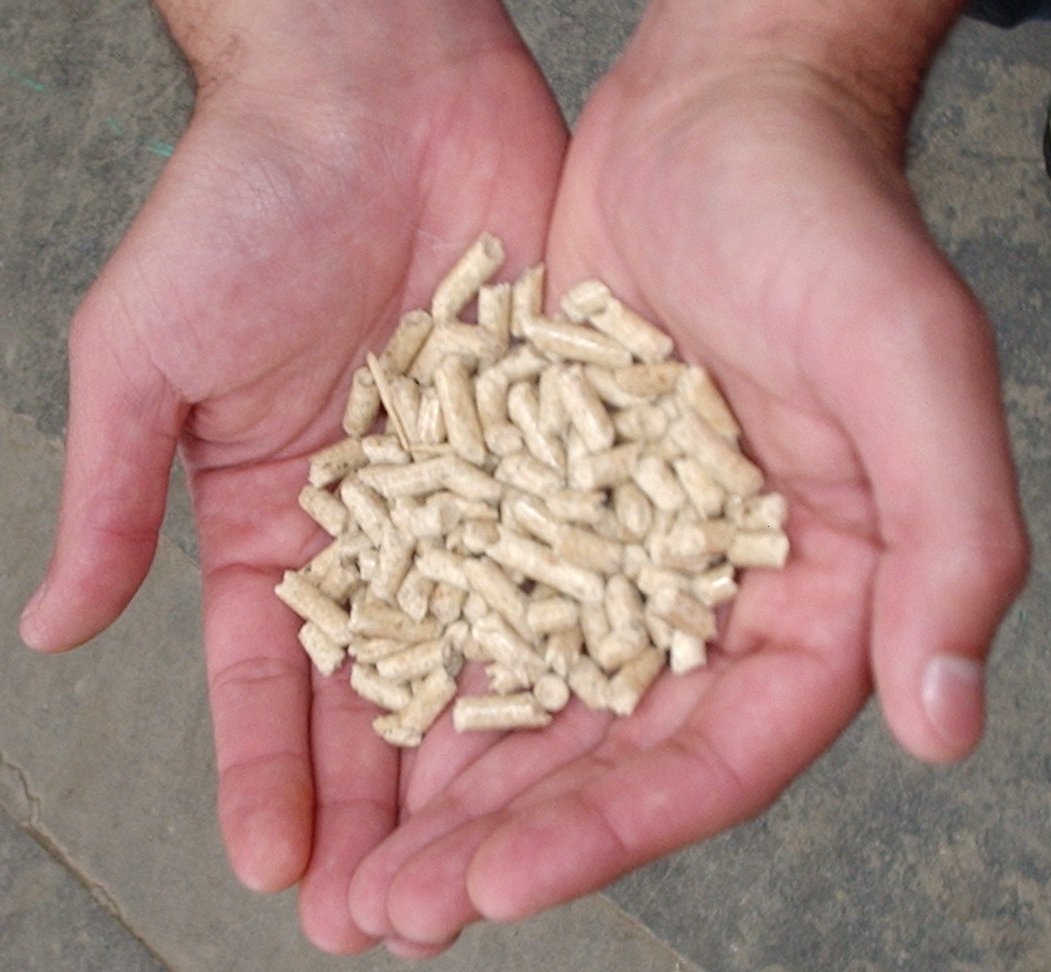
A good wood pellets price per ton stops being good if the fuel gets damp. Pellets swell and crumble when they get wet, and a ruined bag is money gone. The EPA’s advice is short and sensible: store wood and pellets off the ground in a dry, covered place (EPA Burn Wise tip sheet). A garage, a dry shed or a cellar is ideal. If a pallet has to sit outside, lift it off the ground and cover it fully with a sound tarp.
There’s also a safety point that matters if you store a lot of pellets loose in an enclosed room or silo. Stored pellets can give off carbon monoxide and use up oxygen in a closed space. In Europe, 13 deaths from carbon monoxide poisoning linked to pellet stores, ship holds and silos were recorded between 2002 and 2011 (KAN, the German Commission for Occupational Health and Safety and Standardization). A study for the New York State Energy Research and Development Authority also found that off-gassing from stored pellets can reach levels of health concern and should be managed with ventilation (NYSERDA report). Bagged pellets in a ventilated garage carry far less risk, but if you have a bulk store, ventilate it, fit a carbon monoxide alarm nearby and never climb into a silo without airing it first.
When to buy for the best wood pellets price per ton
Spring and early summer are usually the quietest months, so that’s when suppliers are most likely to offer a lower wood pellets price per ton and delivery slots are easy to book. Prices tend to drift up from September as orders flood in.
That said, the seasonal pattern in the wood pellets price per ton isn’t a law. In 2026 the bigger driver has been sawdust supply rather than the calendar, and in some years the late-winter price has barely moved from the autumn one. A practical approach:
- Buy most of your winter’s fuel in spring or summer if you have the storage.
- Top up with a pallet in autumn rather than waiting until January.
- Avoid running out in a cold snap, when you’ll pay whatever is asked and wait longest for delivery.
If you’re reading this in autumn and your store is empty, don’t wait for a dip that may not come. Order what you need for the next few months and plan a bigger spring order for next season.
A worked example: pricing a winter’s fuel
Let’s put the numbers together for a typical home and see how much the wood pellets price per ton changes with the way you buy. Say a family heats a well-insulated house with a pellet boiler and expects to burn about 4 tonnes over a winter. Here are three ways they could buy it.
| How they buy | Fuel price per tonne | Fuel cost for 4 tonnes | Notes |
|---|---|---|---|
| Single 15 kg bags from a local shop at €7.50 each | €500 | €2,000 | Lots of trips, easy storage |
| Four 1 ton softwood pallets from us | €320 | €1,280 plus delivery | One delivery if ordered together |
| Share of a softwood truckload with five neighbours | about €229 | about €916 plus a share of delivery | Needs a group and space to unload |
Even after delivery is added, the pallet and truckload routes usually come out well ahead of buying sack by sack. The shop price of €7.50 for 15 kg is close to the Italian national average for certified bags, so it’s a realistic comparison rather than an extreme one. Your own sums will differ with your delivery cost, so use this as a template, plug in your figures and see what wood pellets price per ton you really end up paying.
BBQ pellets: why their price per ton is different
Cooking pellets are a separate product from heating pellets and are priced differently. They’re made for food, often from selected hardwoods for flavour, and they’re usually sold in smaller bags. That’s why our Hardwood BBQ Pellets pallet costs more per tonne than heating fuel, while the Softwood BBQ Pellets pallet sits closer to heating prices because softwood burns hot and fast, which suits searing rather than long smoking.
Don’t burn heating pellets in a food smoker, and don’t assume cheaper grill pellets are a bargain if they’re full of binders or unknown wood. For caterers, food trucks and restaurants that go through bags quickly, buying a tonne at once brings the cost per cook down a long way compared with retail bags.

Mistakes that push your real cost per ton up
Most of the money people lose on pellets isn’t in the headline wood pellets price per ton. It’s in the small things around it.
- Comparing tons with tonnes. A short ton holds about 9% less fuel. Always convert before comparing.
- Ignoring delivery. A low price per tonne with a heavy delivery charge can cost more than a slightly higher price delivered free or cheaply.
- Buying uncertified fuel to save a few euros. More ash, more cleaning and more breakdowns quickly wipe out the saving.
- Storing pellets badly. One wet pallet can cancel out a whole season’s discount.
- Running out in January. Emergency orders in a cold spell are the most expensive pellets you’ll ever buy.
- Mixing many different brands. Some appliances need a small adjustment for each fuel. Sticking with one batch for the season keeps the burn steady.
- Buying far more than you can store well. Pellets keep for a long time when dry, but not if they’re stacked somewhere damp.
Frequently asked questions
What is the average wood pellets price per ton in 2026?
It depends on country and order size. In Germany, certified pellets averaged €464.61 a tonne for a 6-tonne delivered order in October 2026. French bulk prices sat around €430 to €466, and UK bulk prices around £340 to £400. In the US, a ton of bagged pellets usually costs $200 to $400. Buying a full pallet or a truckload brings your wood pellets price per ton well below these retail figures.
What’s the cheapest way to buy wood pellets?
Buy in the largest quantity you can store and use, ideally in spring or summer, and order everything on one delivery. A full truckload is the cheapest per tonne. For households, ordering several pallets at once is the next best thing.
How many bags are in a ton of pellets?
In Europe, a tonne is about 65 to 67 bags of 15 kg. In North America, a short ton is fifty 40 lb bags. Our standard pallets are about 1,000 kg in 15 kg bags, and the mixed pallet holds 65 bags totalling 975 kg.
Are bulk pellets cheaper than bagged pellets?
Usually, yes, because there’s no bagging cost. In France this autumn, though, bags and bulk were priced within about €11 a tonne of each other for a while, so check both. For homes without a silo, bagged pellets on a pallet are the practical choice and still far cheaper than buying single sacks.
Why did pellet prices rise in 2026?
Mainly because there was less sawdust to make them from. Weak demand for sawn timber led sawmills to cut less wood, which left less residue for pellet plants. In Germany, 26-tonne prices in October 2026 were about 27% higher than a year earlier.
Are pellets still cheaper than oil or gas?
In most of Europe in 2026, yes. German figures put pellets at around 45% cheaper than heating oil per unit of heat in October 2026, and UK analysis puts bulk pellets close to mains gas and far below electricity per kWh. The best check is your own: convert your pellet price per tonne into cost per kWh as shown above and compare it with your current bill.
Do you deliver outside Europe?
Yes. We ship worldwide. Delivery cost depends on your address, the quantity and access at your end, so we confirm it in writing before dispatch. For large orders, get in touch with your location and we’ll quote the full delivered price per tonne.
Do you also sell firewood?
We do. If you heat with logs rather than pellets, see our dried firewood range, including seasoned firewood by the cord and seasoned maple firewood. The dried firewood guide explains which suits your stove.
Ready to order?
If you’ve read this far, you know more about the wood pellets price per ton than most people who buy pellets every winter. Here’s the short version of how to get a good deal:
- Pick certified fuel that suits your appliance.
- Buy by the pallet or truckload, not the sack.
- Compare delivered prices per tonne, not headline prices.
- Order early and store the pellets dry.
For most homes, a 1 ton softwood pallet, a 1 ton hardwood pallet or the oak blend pallet is the right starting point. For resellers, farms and large boilers, the softwood truckload and hardwood truckload give the lowest price per tonne we offer. Not sure which? Try the mixed pallet, read more about us, or send us a message with your address and what you heat, and we’ll recommend a fuel and confirm the delivered price.
Sources and References
- Haustechnikdialog: German pellet price for October 2026, based on DEPI data
- top agrar: why pellet prices rose in October 2026
- Selectra: French pellet prices per tonne before winter 2026
- Selectra: the quarterly price index compared with October quotes
- Bourse Inside: French bulk, bag and pallet prices, autumn 2026
- Idealista: Italian pellet prices per bag and per kilo, October 2026
- QualEnergia: AIEL national pellet price survey, April 2026
- Selectra UK: wood pellet prices, autumn 2026
- HomeAdvisor: wood pellet prices in the United States
- Argus Biomass Markets: industrial pellet prices, January 2026
- Argus Biomass Markets: industrial pellet prices, April 2026
- ENplus handbook: quality requirements for A1, A2 and B pellets
- Pellet Fuels Institute: PFI Standards Program
- Biodiesel Magazine: PFI premium, standard and utility grade limits
- US EPA Burn Wise: pellet stoves and pellet quality
- US EPA Burn Wise: storing wood and pellets
- KAN: safe storage of wood pellets
- NYSERDA: carbon monoxide in wood pellet storage bins